Our Fellows
Our fellows
The People of the IJR
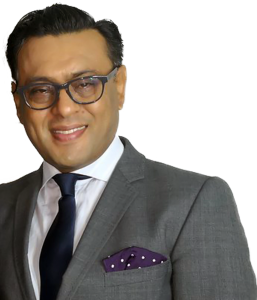
He has held key positions at leading organisations such as the Institute for Democracy in South Africa (IDASA), the Centre for Policy Studies (CPS), and the Electoral Institute for Sustainable Democracy in Africa (EISA), where he managed programmes on political parties, parliaments, elections, and governance across several African countries.
Ebrahim has some teaching experience. He was part time lecturer at the University of the Witwatersrand Schol of Governance, was an annual guest lecturer at Stellenbosch Universities Sustainability Institute, and sessional lecturer at the University of Johannesburg’s sociology department. His academic involvement extends to having served as an external examiner at WITS and the University of Cape Town, where he has assessed postgraduate work on governance, law, and political reform.
Beyond academia, he contributes to civil society and institutional development as a board member of Afesis and as a member of the Advisory Council of the Council for the Advancement of the South African Constitution (CASAC). His research, writing and consultancy work have informed public institutions, donor organisations, and think tanks, and he continues to produce policy-relevant analysis on politics, democratic government electoral processes.
Ebrahim’s writing has been published in academic journals and in mainstream media, including News24, The Sunday Times, Mail and Guardian, and Daily Maverick, where he provides analysis and commentary on South African politics, governance crises, and democratic accountability.
He read for a Bachelor of Arts in English and a BA Honours in English with Political Studies from the University of the Witwatersrand, Johannesburg where he was elected on the Students Representative Council (SRC) after the unification of the South African National Students Congress (SANSCO) and the progressive white students organisation, the National Union of South African Students (NUSAS). His professional development includes fellowships at the University of Sussex’s Institute of Development Studies (2006), Stanford University’s Draper Hills Summer Fellows Program (2011), and the Ruth First Fellowship at WITS Journalism (2014).


Dr. Dzinesa has held academic and research positions at institutions such as the University of Johannesburg’s Institute for Pan African Thought and Conversation, Rhodes University, and the Institute for Security Studies. His expertise spans disarmament, demobilization, and reintegration (DDR), transitional justice, democracy, and regional peace infrastructures, with consultancy experience for organizations like SADC, the Norwegian Institute of International Affairs (NUPI), and GIZ. A prolific writer, he has authored books, journal articles, policy briefs, and op-eds on African security and governance. His work contributes to regional and international discussions on peace, security, and development.

Beyond her military service, Ntsiki is dedicated to mentoring female commanders, coaching young executives, and supporting victims of sexual abuse. She holds a Master’s degree in Political Policy Studies from the University of Pretoria and is a PhD candidate at UNISA, researching gender institutionalization in the armed forces. An accomplished public speaker, she has presented at international forums, including the African Union and NATO. Her contributions to military literature include the book Spear of Hope and chapters on peacebuilding in Africa. Fluent in multiple South African languages, she continues to drive impactful change through research, advocacy, and leadership.

Dr. Olaleye has led numerous high-impact initiatives in collaboration with the African Union, Regional Economic Communities (RECs), and global intergovernmental organisations. He has contributed significantly to areas such as socio-economic and environmental justice, women’s rights, governance of natural resources, and HIV/AIDS advocacy. His strategic leadership includes managing multidisciplinary teams and delivering transformative projects in over 22 Sub-Saharan African countries. As the Director of Secure Africa Consulting, Dr. Olaleye provides strategic direction for projects addressing issues like extractives governance, democratic reform, and human rights. He has also held leadership positions at ActionAid International, Mandela Institute for Development Studies (MINDS), and the Centre for Learning on Evaluation and Results (CLEAR-AA), among others. A prolific researcher and author, Dr. Olaleye has published extensively on governance, elections, and socio-economic justice. His work reflects a deep commitment to sustainable development and empowering African institutions to drive meaningful change.

Her areas of expertise include multi-stakeholder dialogue facilitation, human rights-based approach to programming, gender and conflict analysis, gender mainstreaming, diversity sensitisation, strategic planning facilitation, programming and project management, leadership awareness raising, organisational culture development, communication skills training and team building facilitation. Her current focus is a creative integration of her experience in the development sector, the arts and capacity building. Her approach to work is that it needs to be “inspirited” and that means putting her imagination, intuition, and spiritual intelligence to work!

In addition to his policy and research work, Piers has held advisory and consultancy roles with organisations including the African Development Bank, the International Truth & Justice Project, and The Elders. He has a rich background in leading access to justice initiatives, supporting civil society, and promoting constitutional rights. With a Master’s degree in Southern African Studies from the University of York and fluency in English and French, Piers brings a thoughtful, interdisciplinary approach to addressing complex political and human security challenges.

She holds a Ph.D. in Social Development from the University of Cape Town, a Master’s in Peace and Conflict Transformation from the University of Tromsø, and a Bachelor’s in Development Studies from the University of Zambia. Her research and teaching have focused on African feminism, peacebuilding, and post-conflict reconstruction. Yaliwe has co-authored research on participatory theater and equality among marginalized groups, and her work extends to co-founding Maliya Tours & Transfers, showcasing distinct African herstories. She is also a published author, having contributed to leading journals and books on African feminism, gender, and peacebuilding. A board member for numerous organizations, Yaliwe continues to advocate for gender justice and transformative leadership across the continent.

With a strong background in rural enterprise revitalization, social impact analysis, and economic justice advocacy, she has led expert roundtables, policy reviews, and feasibility studies on carbon sequestration and sustainable value chains. She has held key leadership positions, including Director of the Business Clinic at the University of Pretoria and CEO of Marula Natural Products. Academically, she holds an MPhil in Entrepreneurship and Small Business Development and has completed a PhD research proposal on SME turnaround strategies. She is also an author, with her book Power of the Cooperative Economy published in 2021 and Dynamic Enterprises Blueprint set for release in 2025. Her work spans governance, economic justice, and enterprise development, making her a key figure in shaping sustainable business strategies in Africa.


As the founder of the Academy for Research (ATHR) and co-founder of WatchElect (WE), Derrick continues to champion bottom-up, community-driven initiatives to promote sustainable democratic transformation. He is a Pan-Africanist, ordained minister, and dedicated human rights activist, with professional memberships in organizations like the Election Support Network of Southern Africa (ESN-SA). Derrick’s expertise spans conflict mitigation, project management, and election observation in regions such as the Great Lakes, West Africa, and Southern Africa. A prolific contributor to written works on theology, democracy, and mediation, he remains a passionate advocate for justice, reconciliation, and human dignity.

Throughout his career, Dr. Gomes Porto has devoted a considerable time designing and delivering tailor made advanced and executive trainings on peace and security issues(particularly conflict analysis, negotiation, mediation and dialogue) to professionals from a wide variety of organisations, including the African Union and the Regional Economic Communities (particularly EAC and ECOWAS), UNOWA and UNOCA, KAIPTC, African foreign affairs and defence departments, among others. In this regard, Gomes Porto was part of the team that designed the Executive Masters on Peace and Security in Africa (MPSA), a programme endorsed by the African Union and held twice a year at the University of Addis Ababa Institute for Peace and Security Studies. For the last twenty years, Dr. Gomes Porto has worked extensively in the policy research, training and capacity building fields, particularly with African regional and sub-regional organisations, with a continuous advisory consultant role to the African Union Peace and Security Departments (2005-2019) working directly on the Continental Early Warning System, the Panel of the Wise/PanWise and FemWise. With ECOWAS, Gomes Porto acted as technical expert in the mediation support team created to support the efforts of H.E. President Obasanjo in Guinea Bissau, was co-facilitator of ECOWAS’ initiative to enhance the capacity of the Guinea Bissau Parliament to manage Inter-Party Disputes, and was the lead consultant in the development of the ECOWAS Mediation Guidelines. Dr Gomes Porto holds a PhD in International Conflict Analysis and Resolution from the University of Kent at Canterbury (2003).
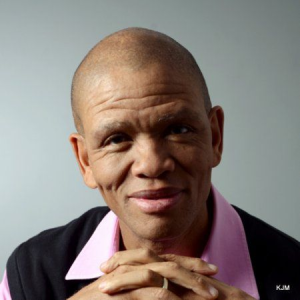
Accomplishments include:
• Successfully supervised two doctoral students and a few Master of Arts (MA) students in the past eight years.
• Was appointed Visiting Scholar at the University of Botswana, Department of Political and Administrative Studies, January – March 2023.
• Successfully served as a Fulbright Scholar-in-Residence at the Department of Political Science, Lincoln University, Pennsylvania, USA (Aug. 2024-May 2025)
• Collaborated with a team of more than 20 UNISA (University of South Africa) and other academics in the development of the Management of Democratic Elections in Africa (MDEA) program to train more than 100 elections officials across Africa (2014-2018)
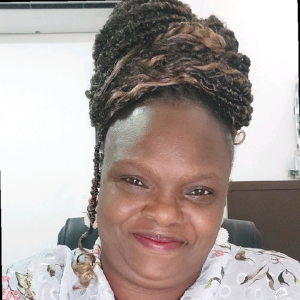

His latest book, Political Transitions that work—Reconciliation as Interdependence, by Oxford University Press in collaboration with Notre Dame University, appeared in July 2018. As Rhodes Scholar at Oxford University, he completed a D.Phil in the Philosophy of Religion in 1995, and in 2005 he received a further Masters’ degree in Justice and Transformation from the University of Cape Town (UCT). In 2007 he received UNESCO’s International Prize for Peace Education on behalf of the IJR. He is also an Honorary Associate Professor at UCT’s Department of Political Studies and a member of the Advisory Board of the Council for the Advancement of the South African Constitution.
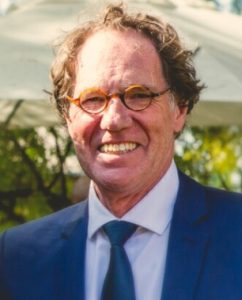
Peter Knoope has experience across the humanitarian-security-development cooperation nexus from high-level bilateral and multilateral cooperation to designing of national and country-specific cooperation strategies, research, public relations and diplomacy in the areas of justice, security and human development. In 2005-2009 he served as the Deputy Director (Policy and Strategy) in the National Coordinator for Security and Counter Terrorism in the Ministry of Justice, The Hague. He is the founder of the International Centre for Counterterrorism (ICCT) in the Hague and served as the Director of ICCT from 2009-2014.